Bernice · Virtual human case study
5 minute read · 2023–24
Are social feedsteaching us to wantthe same face?
My hypothesis was aesthetic convergence: that algorithmic feeds were narrowing what people see as beautiful. Bernice is the virtual human I built to make that convergence visible — and to test it back on the platform.
- Role
- Concept, build & narrative — solo
- Context
- Individual M.S. thesis · Columbia GSAPP · 2023–24
- Computational tools
- Design methods
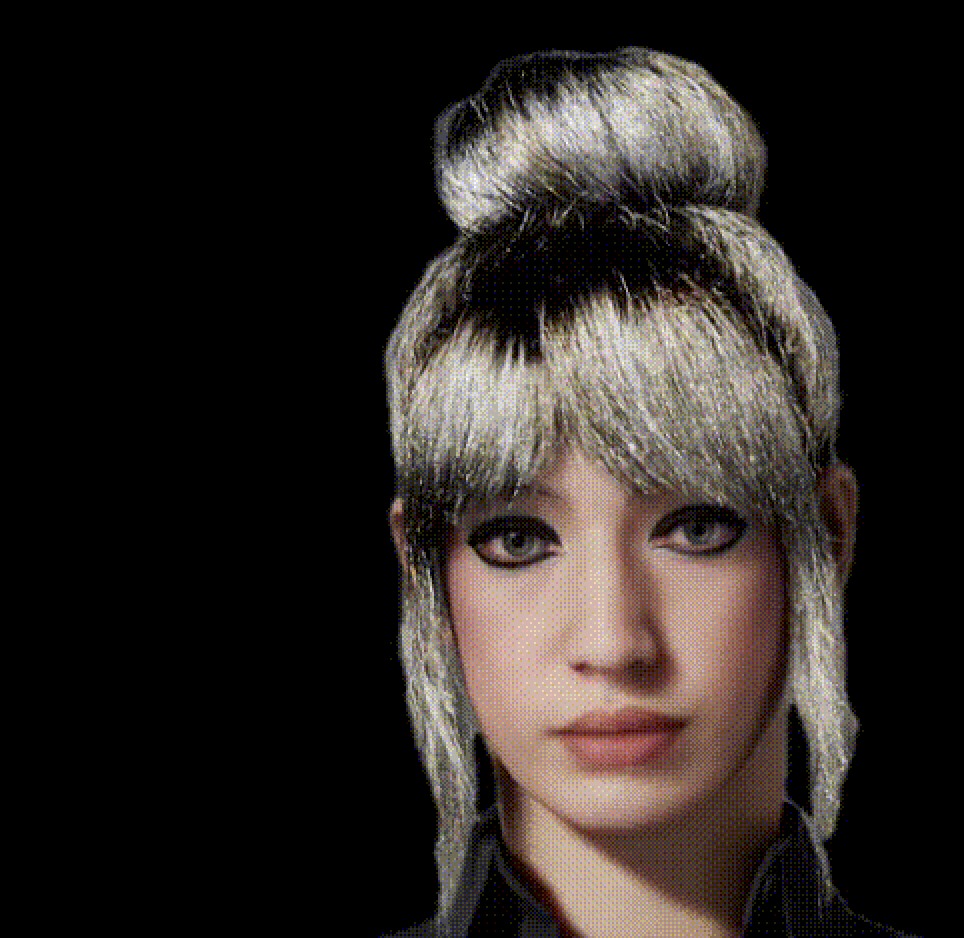
Social platforms became a school of taste.
“Looks AI-generated” had quietly become a compliment on social media.
Scroll a beauty or lifestyle feed long enough and the faces start to rhyme — the same jawline, the same “A4 waist,” the same dewy skin, ranked and amplified until sameness reads as aspiration.
To see it for myself, I collected beauty posts by hashtag and looked at the sheer attention behind each “ideal,” then overlaid creator headshots to trace how narrow the accepted range had become. It was a hand-collected, qualitative read — not a rigorous dataset — but the convergence was hard to miss.
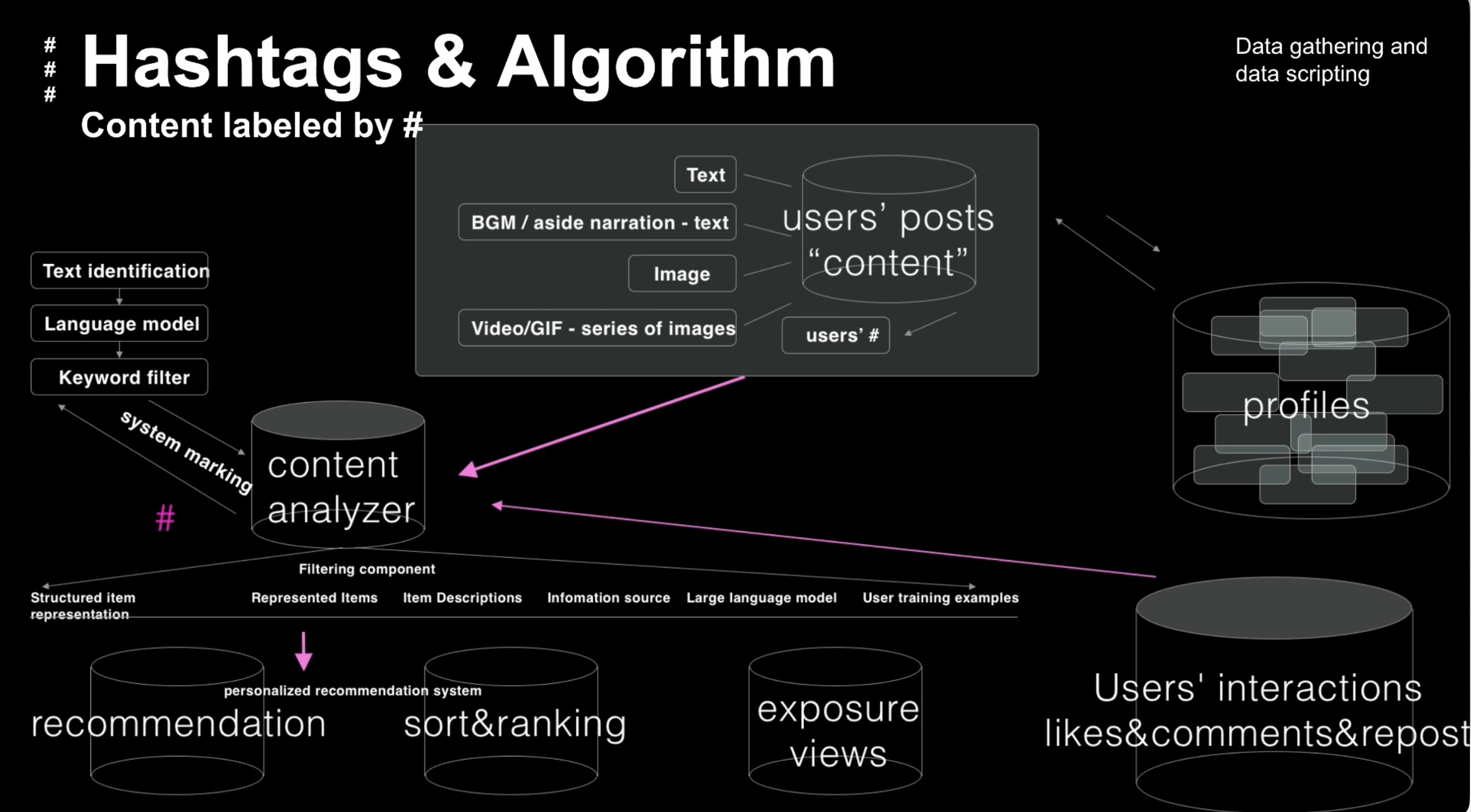
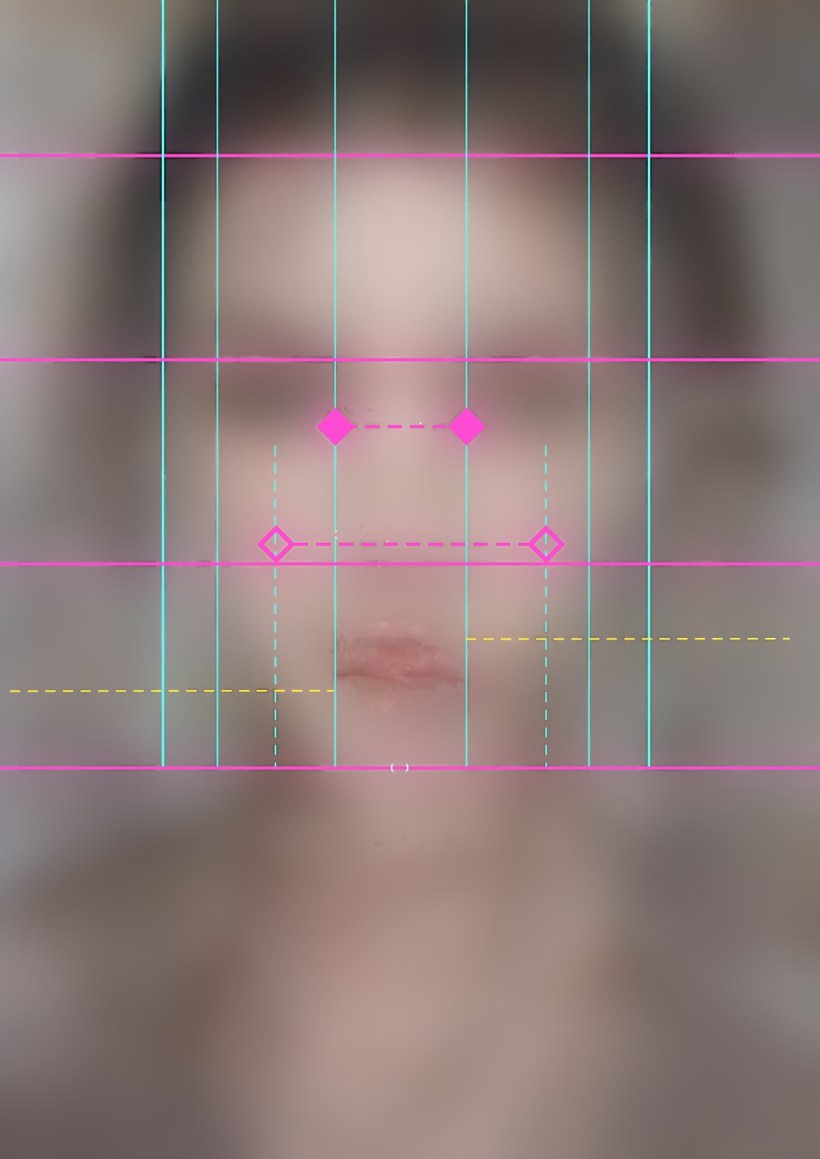
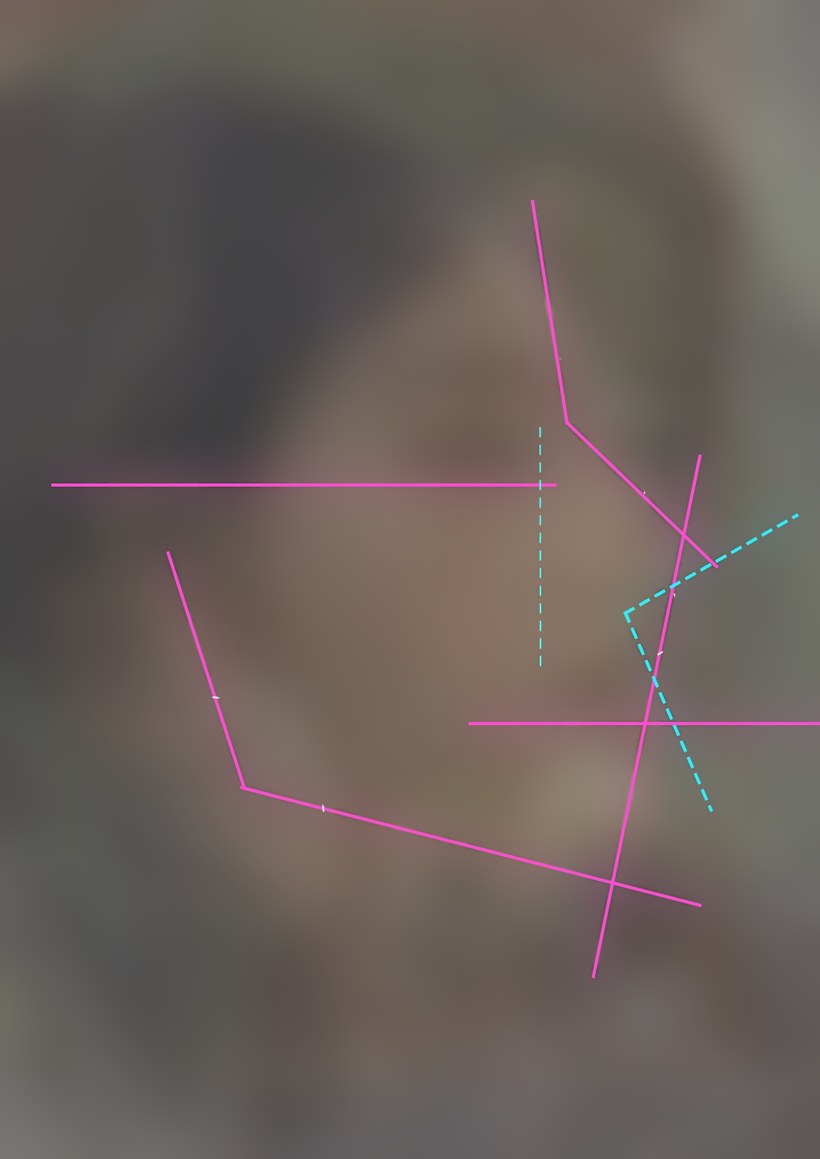
So I built the logical endpoint.
If convergence has a destination, it looks like a synthetic person — more “perfect,” more controllable, and more tireless than any human creator. Rather than write about it, I decided to make one, and see what building it would teach me.
Social media platforms have become the new visual institution of the digital age. What people post is filtered, reordered, and published by algorithms that propose new trends — and reshape public aesthetics of women's appearance.
One person, the whole pipeline.
I built Bernice as a MetaHuman in Unreal Engine, drove her performance with iPhone AR facial capture, and used Midjourney for her imagery and ChatGPT to draft her posts — then gave her a voice, as a first-person film and a virtual account.
There’s an irony I leaned into: I couldn’t hand my measurements to the software. Bernice’s face came from MetaHuman’s built-in presets — a handful of “defaults” that already encode an idea of beauty before you touch a slider. The tool proved the thesis better than my analysis could, and building it end to end is how I found that out.
MetaHuman in Unreal Engine
iPhone AR facial capture, Live Link
Midjourney imagery · ChatGPT scripts
A first-person film and a virtual account
A virtual influencer, self-aware on purpose.
“From the relentless pursuit of being perfect to a journey of release and acceptance.”
I wrote Bernice a voice — a first-person film and a nine-post narrative arc that moves from the pressure to be flawless toward release and self-acceptance. I designed all nine; I published two before hitting the wall that became the project’s sharpest finding.
In 2024, the tools couldn’t hold her identity steady. Midjourney redrew a subtly different face each time, drifting off Bernice unless I retrained the model — so a “consistent” synthetic influencer simply wasn’t operable yet. The account and its follower count are a constructed thesis prop, not a real audience; what’s real is what the attempt taught me about where the technology broke.
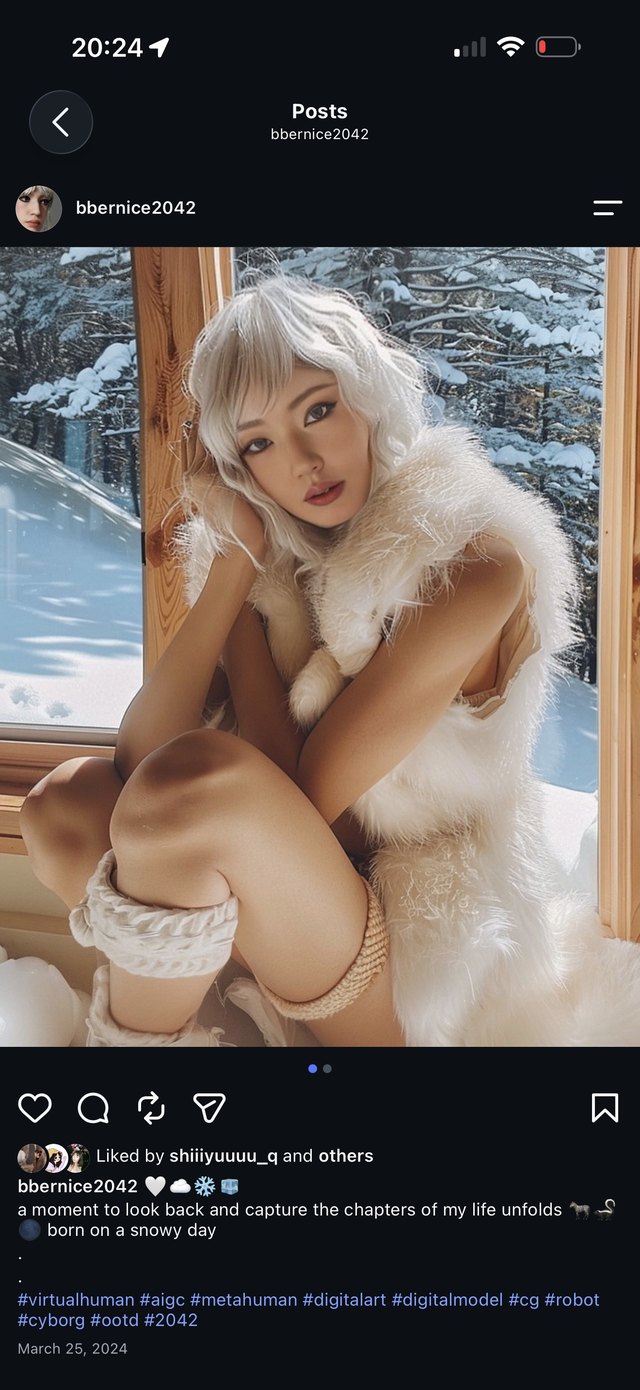

The two posts that actually shipped (@bbernice2042). Look closely: the face drifts between frames — the consistency limit, visible in the published work itself.
What you gain, and what you give up.
I mapped synthetic creators against human ones across the tradeoffs a platform or brand would actually weigh. The pattern underneath: the most controllable creators are the ones people trust least — the tension synthetic media keeps walking into.
| Tradeoff | Synthetic influencer | Human creator |
|---|---|---|
| Image control | Total — every pixel is a decision | Bounded by a real body and life |
| Output | Continuous; never rests or ages unless scripted | Finite; needs time and rest |
| Cross-cultural reach | Re-skinned per market on demand | Rooted in one identity |
| Controversy risk | Low; every word is authored | Higher; unscripted and human |
| Authenticity | Manufactured | Lived |
| Audience trust | Fragile the moment it is disclosed | Earned, and durable |
The question moved faster than the tools.
A critical build: a virtual human, a pipeline I ran end to end, and a thesis about what algorithmic feeds do to how we want to look.
Character consistency was the wall in 2024; the models and tooling since have largely dissolved it. I’d treat the evidence systematically instead of a hand-picked wall, and push the build toward something interactive rather than a fixed narrative.
In one line